From Orchestra Conductor to AI Prompt Owner
May 27, 2026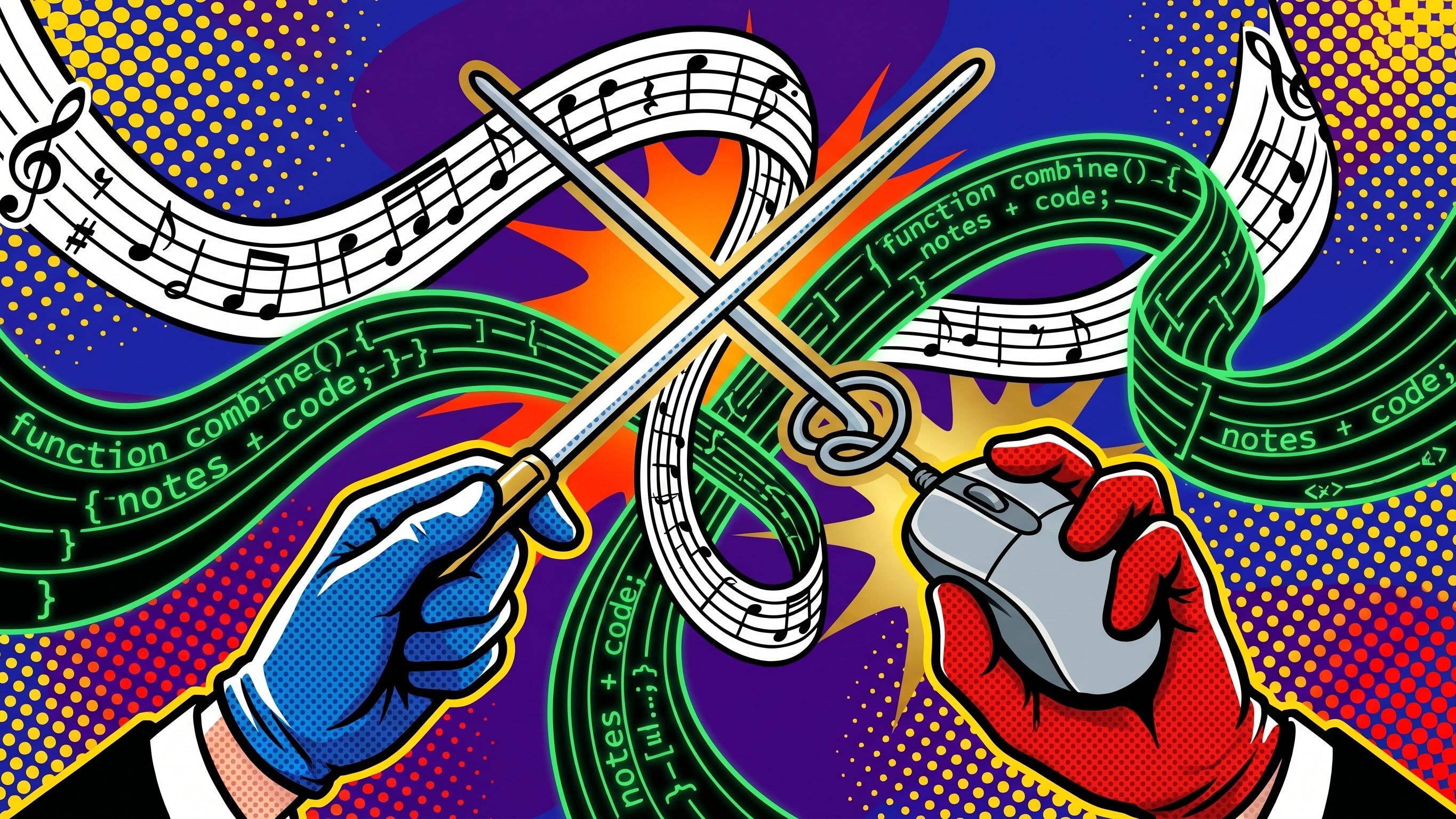
From Orchestra Conductor to AI Agent Maestro
A PhD in classical music. A career conducting orchestras and teaching professors. Now he owns the prompts iand orchestration n production at an ed-tech company.
Brian Diller spent years standing in front of orchestras, reading dozens of musical lines simultaneously, making real-time decisions about balance and pacing that the musicians themselves couldn’t hear from inside the ensemble. He earned a PhD in classical music. He was a music professor.
Now he’s an AI Product Manager at Watermark, an ed-tech company, and he owns something most product leaders are still figuring out how to touch: the prompts.
“At Watermark, product owns the prompts. Which is a really cool power, but it also gives us all the responsibility mostly of being the leader on what is our prompting strategy.”
That word “responsibility” is doing a lot of work in that sentence. Owning the prompts means owning the outcomes. Every hallucination, every misfire, every edge case where the model says something wrong to a student or an administrator — that traces back to product’s decisions.
The skills nobody would predict
The career arc from orchestra conductor to prompt owner sounds absurd on paper. But the transfer is real, and it runs deeper than “both require attention to detail.”
A conductor’s job is reading nuance across a system in real time. Thirty musicians playing simultaneously, and you’re listening for the second clarinet that’s slightly flat, the tempo drift in the brass section, the dynamic balance between strings and woodwinds that will sound completely different from the audience’s perspective than it does on the podium. You’re making judgment calls about subtlety that can’t be reduced to rules.
Prompt engineering works the same way. The difference between a prompt that produces useful analysis and one that produces confident garbage is often a matter of phrasing, context, sequence. You develop an ear for it. Or you don’t.
The prompt laboratory
Brian didn’t stop at owning the prompts himself. He made them visible to the whole team. This is the player-coach move.
“I put the prompts right in the UI. It was a special button that you could click. You open up the prompt, you can change the prompt, see how the analysis changed. It was supposed to be like a working laboratory.”
Think about what that means. Instead of prompts living in some backend file that only engineering touches, Brian built an interactive environment where colleagues could open the prompt, modify it, and watch how the output changed. A laboratory, not a black box.
He built it to prove that the feature worked. To give his colleagues a playground where they could develop their own intuition about what the model was actually doing. A professor’s instinct — make the invisible visible so other people can learn.
A decade in a year
The speed of this field warps your sense of time. Brian put it plainly:
“A year ago feels like a decade ago… that’s really what it takes to be on the forefront of this is diving in and getting hands on.”
That compression is real. The leaders I talk to on the podcast who started getting hands-on twelve months ago have a fluency today that feels like years of accumulated experience. The ones who waited, who planned to “ramp up next quarter,” are now multiple generations of capability behind.
Brian’s path from classical music to AI product management isn’t the obvious route. But the skills that made him a great conductor — reading complex systems in real time, hearing what others miss, making the invisible visible for the people around him — turned out to be exactly what owning AI prompts in production demands.
The career that prepared him best was the one nobody would have guessed.
(For more, drop AI Career Boost a follow on YouTube!)
Polly Allen is the founder of AI Career Boost and host of The AI Product Leader podcast. She led the first generative AI answers on Amazon Alexa in 2020, before ChatGPT made any of it mainstream, and built the AI Career Boost Blueprint — an 8-week program for product leaders from Staff and Senior Manager to CPO, becoming indispensable AI player-coaches. Subscribe to The AI Player-Coach newsletter → · Join the next live masterclass →