She Never Opened a Terminal. Now She Runs Four.
May 27, 2026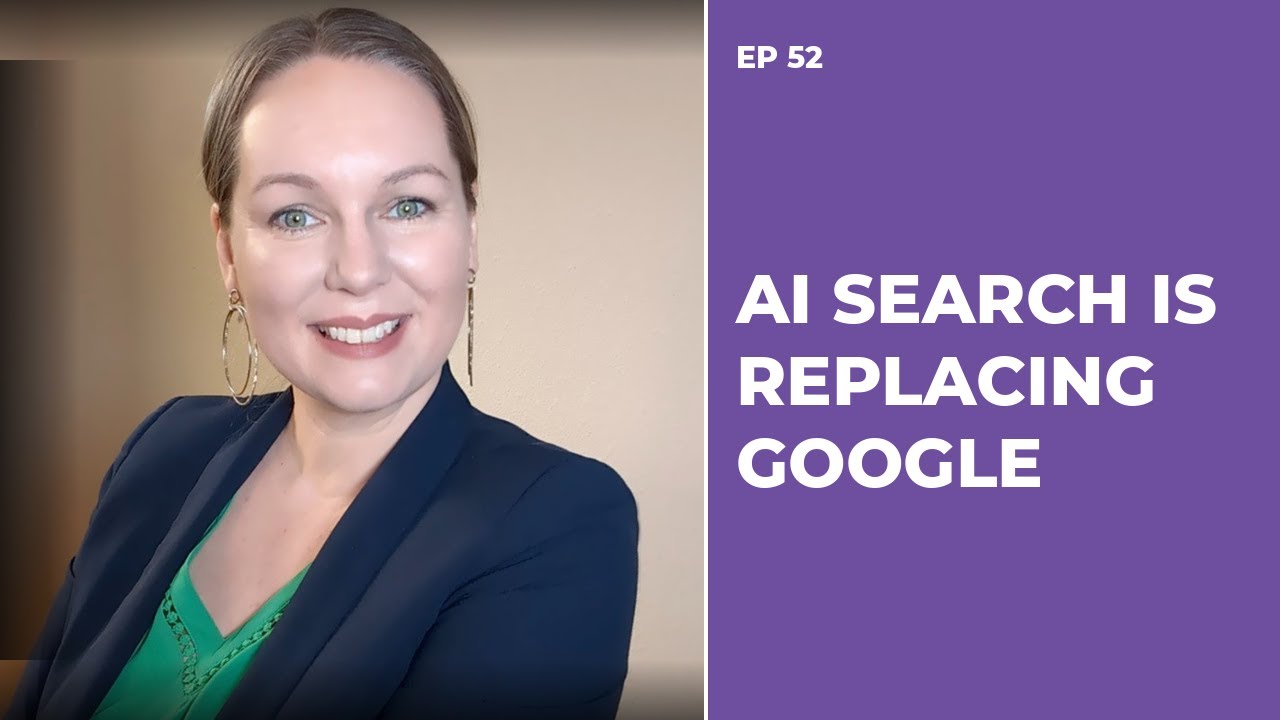
She’d Never Opened a Terminal. Now She Runs Four.
How a former CPO built an entire AI consulting practice from scratch — starting with a blinking cursor she’d never seen before.
Maggie Mae had run product at two tech companies. CPO at Tomo, a mortgage fintech. Before that, AudioEye, an accessibility SaaS company. She’d shipped products used by millions. Led engineering teams. Made roadmap decisions that moved revenue.
She had never opened a terminal.
“I had never used a terminal before Claude Code. Like, I had never opened one.”
That blank screen with the blinking cursor — the thing every developer sees a thousand times before lunch — was completely foreign to her. A CPO with years of executive product experience, staring at something she’d never touched.
Why she started building
Maggie didn’t pick up Claude Code because she was bored or curious. She picked it up because she was starting something new: an AI search consulting practice called AISCO (askandbefound.com). The premise was that AI search — the way tools like ChatGPT, Perplexity, and Claude surface and recommend businesses — was becoming a new channel that companies needed to optimize for.
The problem: the only way to know if her approach worked was to run the experiments herself. She couldn’t outsource the testing to an agency. She couldn’t hire a developer to validate her methodology while she watched from a slide deck. The whole value proposition depended on her personally changing variables, watching rankings move, and understanding what drove the results.
So she built the toolstack. Claude Code Max at $250/month. Neon for the database. Heroku and Netlify for deployment. All of it assembled by someone who, weeks earlier, had never typed a command into a terminal window.
What she built — and how fast it worked
The speed of the results is what makes this story stick. Maggie moved a client to the top of AI search results in approximately one hour, using tools she personally built.
“I moved one of my clients to the top of AI search results in about an hour using what I built. That’s not something you can do by outsourcing the tool building.”
That sentence lands differently when you remember where she started. Not “I had a developer build something and I used it.” She built the instruments, ran the experiments, interpreted the data, and delivered the result. The gap between her hands and the outcome was zero.
Now she runs four Claude Code terminals simultaneously on different client projects. Four. The person who’d never opened one terminal is context-switching between four of them at once, each one doing real client work.
The CPO advantage
One of the things Maggie said that I keep coming back to: the product brain is exactly the right brain for this work.
“The CPO brain is exactly the right brain for this. Because I’m thinking about user intent, I’m thinking about what the AI is optimizing for — it’s product thinking applied to a new channel.”
She’s not pretending to be an engineer. She’s applying two decades of product instinct to a new medium. Understanding user intent, thinking about what the system optimizes for, designing experiments to test hypotheses. That’s product management. She just moved it to a terminal window.
This is the AI player-coach pattern in its purest form. A senior leader who gets close enough to the technology to have real opinions, make real decisions, and deliver real results. Not by becoming someone else, but by extending who they already are into a new tool.
The gap your clients can see
Maggie’s sharpest line is also her most uncomfortable one.
“You cannot consult on something you don’t personally build with. Your clients will find the gap.”
That applies beyond consulting. It applies to any senior leader who talks about AI strategy without having built anything. Your team will find the gap. Your board will find the gap. Your competitors who ARE building will find it fastest.
The distance between what Maggie claims to know and what she’s actually done is zero. She changed the variables. She watched the rankings move. She knows why AISCO works because she ran the experiments herself, not because someone handed her a dashboard.
That’s the difference between a leader who talks about AI and a leader who builds with it. The blinking cursor is where the gap closes.
Listen to the full conversation: Episode 52, The AI Product Leader
Polly Allen is the founder of AI Career Boost and host of The AI Product Leader podcast. She led the first generative AI answers on Amazon Alexa in 2020, before ChatGPT made any of it mainstream, and built the AI Career Boost Blueprint — an 8-week program for product leaders from Staff and Senior Manager to CPO, becoming indispensable AI player-coaches. Subscribe to The AI Player-Coach newsletter → · Join the next live masterclass →