From 'Techish' to Director of AI Strategy: How One Leader's Portfolio Closed the Deal
Jul 24, 2026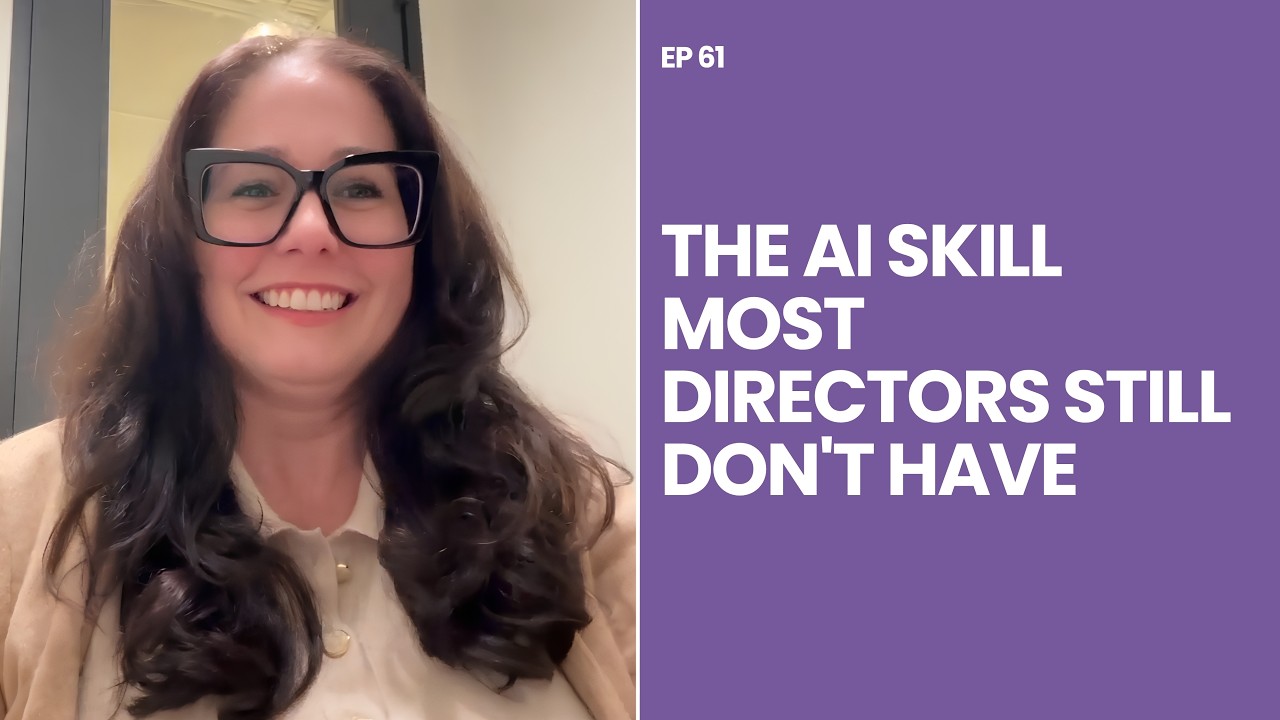
From "Techish" to Director of AI Strategy: How One Leader's Portfolio Closed the Deal
When a job posting says "must be able to vibe code," your resume alone won't get you in. Your portfolio will.
Courtney Kingsbury spent 15 years in enterprise finance and product localization. She was good at her job. Colleagues called her "techish" and "scrappy" — the kind of labels that sound like compliments but actually mean: close enough to tech to be useful, not close enough to be taken seriously.
She knew the difference. So did every hiring manager who read her resume.
Then she enrolled in the Blueprint, quit her job two weeks in, and took a deliberate career break to build. Not to study. Not to get a certificate. To build production AI systems that solved real problems for real organizations.
What she built
Two projects changed her trajectory.
The first was a RAG-based document intelligence tool — now live with enterprise clients. The second was a conversational AI that automated the City of Phoenix's neighborhood tree grant program. That one saved $120,000, reached 600 homes, and required zero additional city staff.
These weren't side projects or portfolio exercises. They were working systems with measurable outcomes. The kind of proof that makes a hiring committee stop reading your resume and start asking how soon you can start.
The job posting that said the quiet part out loud
A Director of AI Strategy and Data Governance role opened at a renewable resource asset management company. The posting included a line that would have been unthinkable two years ago: must be able to vibe code.
Courtney saw it and knew immediately. "They wanted somebody in the post that said specifically that can vibe code. And I was like, I'm your person. Let's go."
That line in the posting tells you where hiring is headed for senior roles. Companies are starting to distinguish between leaders who can talk about AI and leaders who can sit down and build a working prototype in front of the room. The AI player-coach shift isn't theoretical anymore. It's showing up in job descriptions.
Why hands-on changes the conversation
Courtney is clear about what shifted for her — and what she sees missing in other leaders at her level.
"There's a lot of leadership who thinks it's about delegating or getting other people to build it for you. But now that it's so easy to get hands on."
She's right. Directors and VPs who can prototype for themselves are still rare. That rarity is the advantage. When you walk into a meeting with an interactive executive brief you built in Claude Code instead of another PowerPoint deck, the conversation is different. You're not pitching an idea. You're demonstrating capability.
"Just being able to do that for yourself, to show a visual to somebody above you of how things are going to work is going to be so much easier to explain and get the buy-in."
That's the player-coach move: close the gap between your vision and what people can see. A prototype does that. A slide deck doesn't.
The label stops mattering
"Techish" was a ceiling. It positioned Courtney as someone adjacent to technology — useful but not essential. The moment she had two production AI systems and a portfolio of working prototypes, that label became irrelevant. Nobody calls a Director of AI Strategy "techish."
The career transition didn't happen because she learned new terminology or passed a certification exam. It happened because she could point to systems running in production and say: I built that. It works. Here are the numbers.
That kind of proof is hard to argue with. It's also hard to fake.
Hear the full conversation: Episode 61, The AI Product Leader
Polly Allen is the founder of AI Career Boost and host of The AI Product Leader podcast. She led the first generative AI answers on Amazon Alexa in 2020, before ChatGPT made any of it mainstream, and built the AI Career Boost Blueprint — an 8-week program for product leaders from Staff and Senior Manager to CPO, becoming indispensable AI player-coaches. Subscribe to The AI Player-Coach newsletter → · Join the next live masterclass →